How to Properly Build a SaaS MVP Without Wasting Months
Most SaaS products fail because founders start building too early, add too many features or skip validation completely. This guide breaks down the real process successful founders follow before and during MVP development.
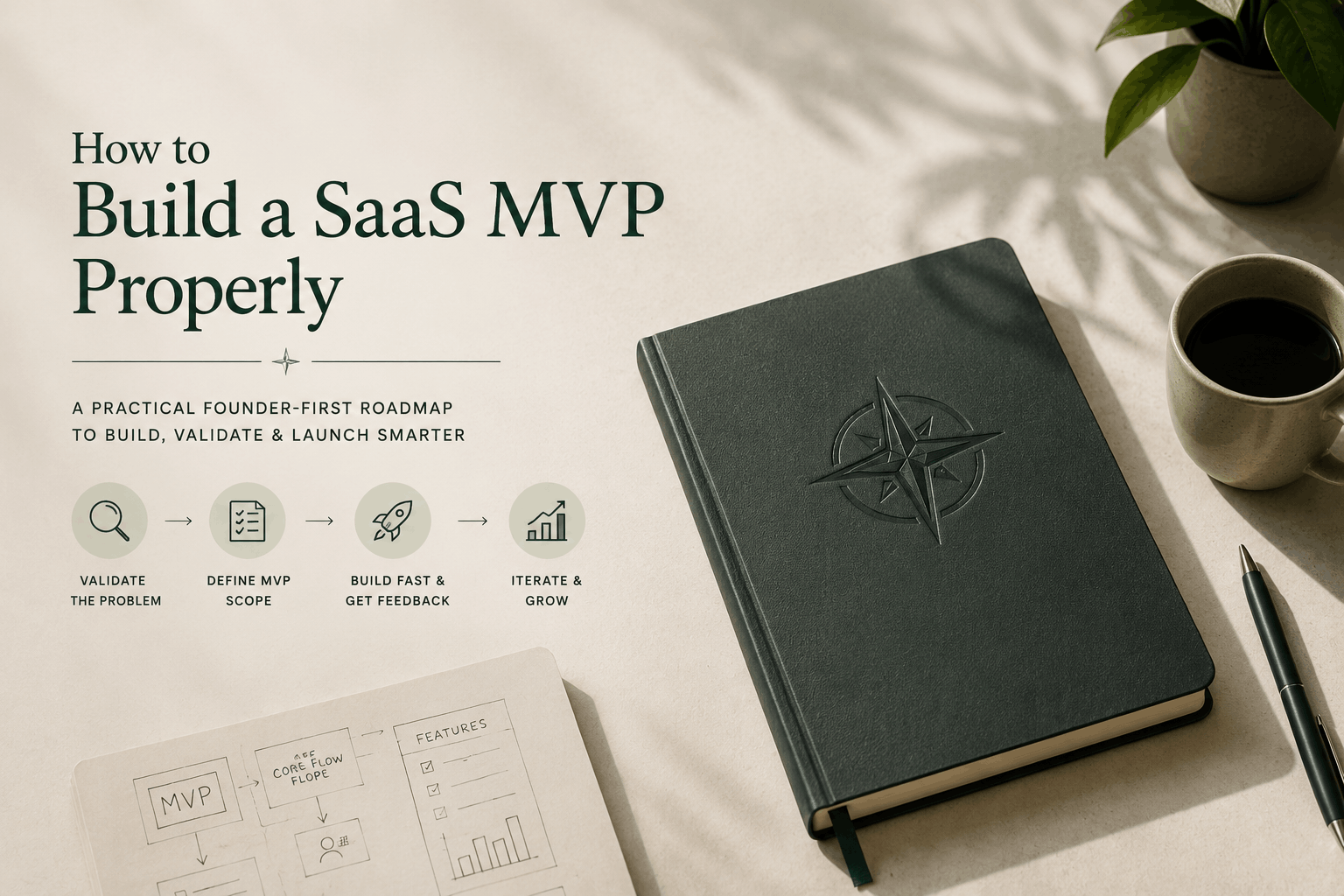
Why most SaaS MVPs fail
A lot of founders think building a SaaS starts with hiring developers. But most problems actually start much earlier than that.Usually it’s things like not understanding the problem deeply enough, trying to build too many features at once, skipping validation, or setting the wrong priorities from day one.A good MVP is not about adding more features. It’s about building the simplest version of the product that solves one real problem well enough that people actually care about it.
Step 1 — Start with the problem, not the idea
Most founders fall in love with their solution too early. Instead, focus on understanding: - what problem exists - who faces it - how painful it is - how people currently solve it If users are already using spreadsheets, WhatsApp, Notion, manual workarounds or expensive tools, that is usually a strong signal and a SaaS becomes valuable when it removes friction from an existing workflow.
Questions founders should answer before building
Who exactly is this product for?
What painful problem are we solving?
How are users solving this problem today?
Why is the current solution frustrating?
What is the one core outcome users want?
What would make users switch to our product?
What assumptions are we making right now?
Step 2 — Validate demand before writing code
Validation does not mean asking friends if the idea is good. Real validation comes from behavior. Some strong validation signals: - users asking for updates - users joining waitlists - users booking calls - people willing to pay - people actively discussing the problem online Before development, founders should spend time in reddit threads, LinkedIn comments, communities, founder groups, review sections and competitor complaints. It usually reveals what users actually care about.
Step 3 — Define the real MVP scope
The biggest SaaS mistake is trying to build Version 5 before Version 1 exists. An MVP should focus on one core workflow only. For example: - not a complete project management platform - just task tracking for small teams Instead of building a complete CRM, the real MVP might just be lead tracking with reminders. The goal is not to impress everyone. The goal is to learn fast and solve one real problem well.
Features that should usually wait
Advanced dashboards
Complex admin panels
AI features added without real need
Multi-language support
Custom themes
Advanced permissions
Over-engineered scalability
Enterprise-level architecture too early
Step 4 — Prioritize speed and feedback loops
A founder's biggest advantage in early stages is speed. The faster you launch, the faster you learn. A simple product with real users is far more valuable than months of hidden development. After launch, focus on: - observing user behavior - understanding drop-offs - tracking confusion - collecting feedback - improving onboarding - fixing friction points Most successful SaaS products evolve heavily after launch.
Step 5 — Choose the right technical approach
Founders often waste money by building systems that are too complex too early. For most MVPs, the tech stack should optimize for: - development speed - maintainability - fast iterations - easy deployment The architecture only needs to support current learning goals. Premature scaling usually creates unnecessary complexity and delays.
What founders should expect during development
Requirements will change during development
Users will request unexpected features
Some original assumptions will fail
Timelines may shift slightly
The first version will not feel perfect
Iteration after launch is completely normal
Step 6 — Launch before you feel fully ready
Many founders delay launch because they want everything polished first. That usually slows learning. If the core workflow works, launch it. Early users do not expect perfection. They care more about whether the product solves their problem. A smaller launched MVP is almost always better than a larger unfinished product.
Final thought
Building a SaaS properly is less about coding and more about making the right decisions early. The best founders stay focused on clarity, prioritization, validation, speed, and constant user feedback. A successful MVP is rarely the exact product imagined on day one. It is the product that survives real user behavior and keeps improving from there.
Need help validating your MVP?
Let’s bring clarity to your idea.
Apply for an MVP Scope Sprint and get a clear roadmap on what to build first, what to delay and how to launch faster.
Apply For MVP Sprint